
Why Top Python Development Companies Are Leading the GenAI Race
In the blink of an eye, over a few years, Generative AI has transformed the possibilities of software, and under the hood of almost every meaningful product lies the same language: Python. The models get all of the attention but the companies that make the models into real products, the companies that make the RAG systems, the LLM features, the fine-tuned assistant—all are working in Python. It's not random or the force of inertia. Python is the glue of the generative AI age, and the firms that early in the game have gotten a handle on it are the ones that are moving the industry along.
With this in mind, if you're considering developing a GenAI product or just wondering why some companies continue to send game-changers in the AI space, the answer is how GenAI is truly created and why Python is the cornerstone.
What makes Python development companies the leaders in generative AI?
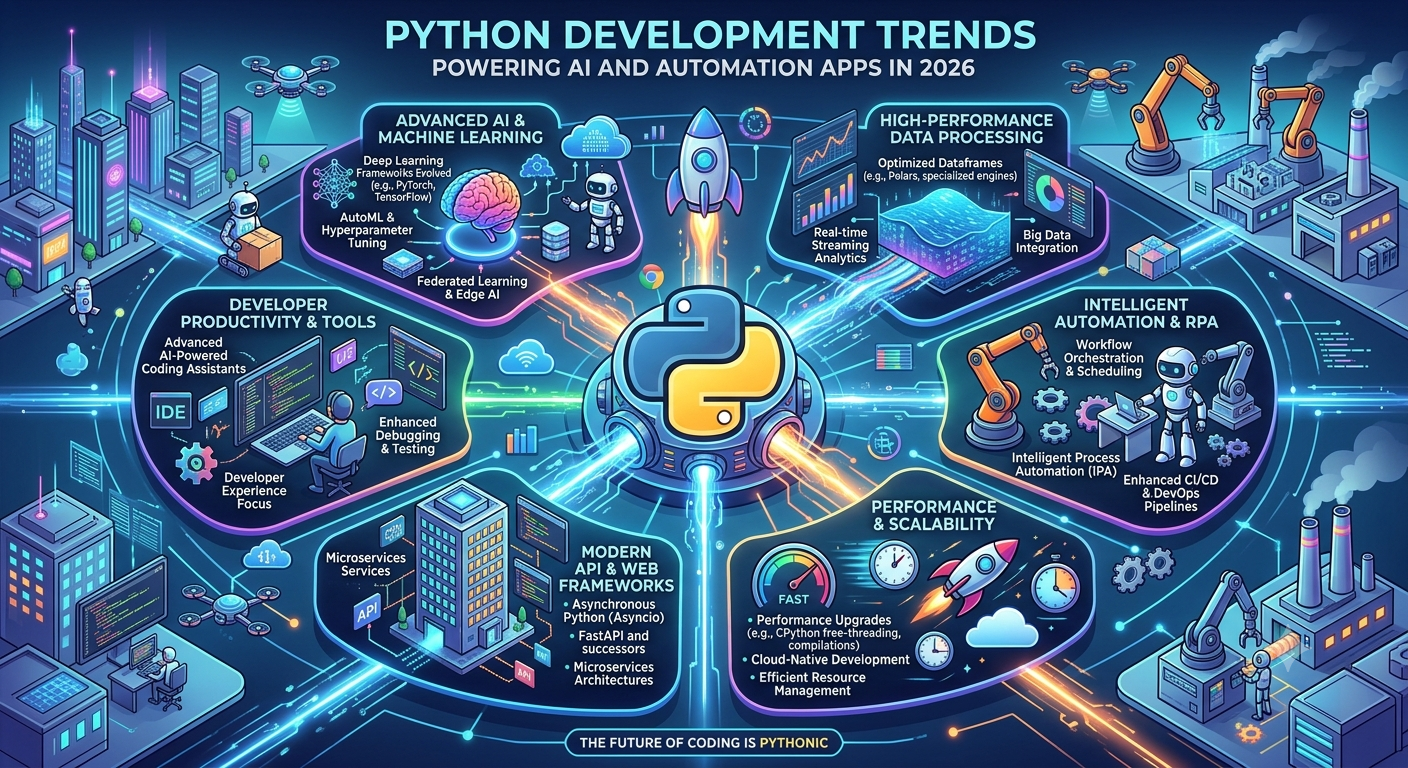
Because Python is the language of the entire GenAI stack, from the model APIs, to orchestration frameworks, to vector databases, to the tools that convert a model into a product, Python development companies are at the forefront of generative AI. Almost all the key LLM providers, AI tools and frameworks release the Python interface as their primary interface first, meaning that teams with Python expertise can build and integrate ship-in-a-bucket generative features faster than any other.
The advantage compounds. As these companies strive to create the first true generative product, the tools, examples, and community are centered on Python, making it easier for a seasoned Python team to navigate through the entire process.
So what exactly is the meaning of being "the leader of the GenAI race"?
Being 'first in the pack' isn't a matter of being able to access better models, but rather that the major models are offered to all via the same APIs. It's on who can make those models “good” products faster and more efficiently.
That work includes not only grounding a model in a company's own data so that it provides accurate answers, but also the construction of the retrieval systems that provide it with the right context; evaluation and enhancement of the quality of the output; control of cost and latency; and wrapping all this in a product that people use. These are engineering problems, and not model problems; these is where the leading Python companies stand out. The car is built by Python around the engine, which is the model.
This was the reason why Python is the language of the GenAI stack.This is why Python is the stack language for GenAI.
The dominance isn't random. It is the Python language that is the first language spoken by each layer of the generative AI stack.
The model and formulation layer is Python oriented
All major LLM providers deliver their Python SDK as their main interface, and most of the orchestration frameworks common to building GenAI apps, the libraries for chaining model calls and their associated prompts, and the retrieval coordination frameworks, are all written in and for Python. The python interface typically comes first and is the most complete when a new model or ability is released. All teams that work in Python receive access to the frontier first.
The data and retrieval layer is implemented in Python.
The context that generative AI products are given is as important as the products themselves, and the context is retrieved. The vector databases, embedding tools and RAG frameworks used in this all are primarily written in Python. The whole retrieval pipeline - from chunking documents to creating embeddings, storing them to searching for relevant context - can all be implemented in one unified environment, such as Python, which is why these GenAI apps are built end to end in Python.
The evaluation and tooling layer is written in Python too.
While it's one thing to be shipping a GenAI feature, it's another to know if it is any good. The tools that test the output of the LLM, track the trace of the prompts, are used to check the quality of the LLM, and capture regressions are overwhelmingly Python based. This is where a GenAI demo becomes a production-ready system you can trust, and where that discipline resides - Python.
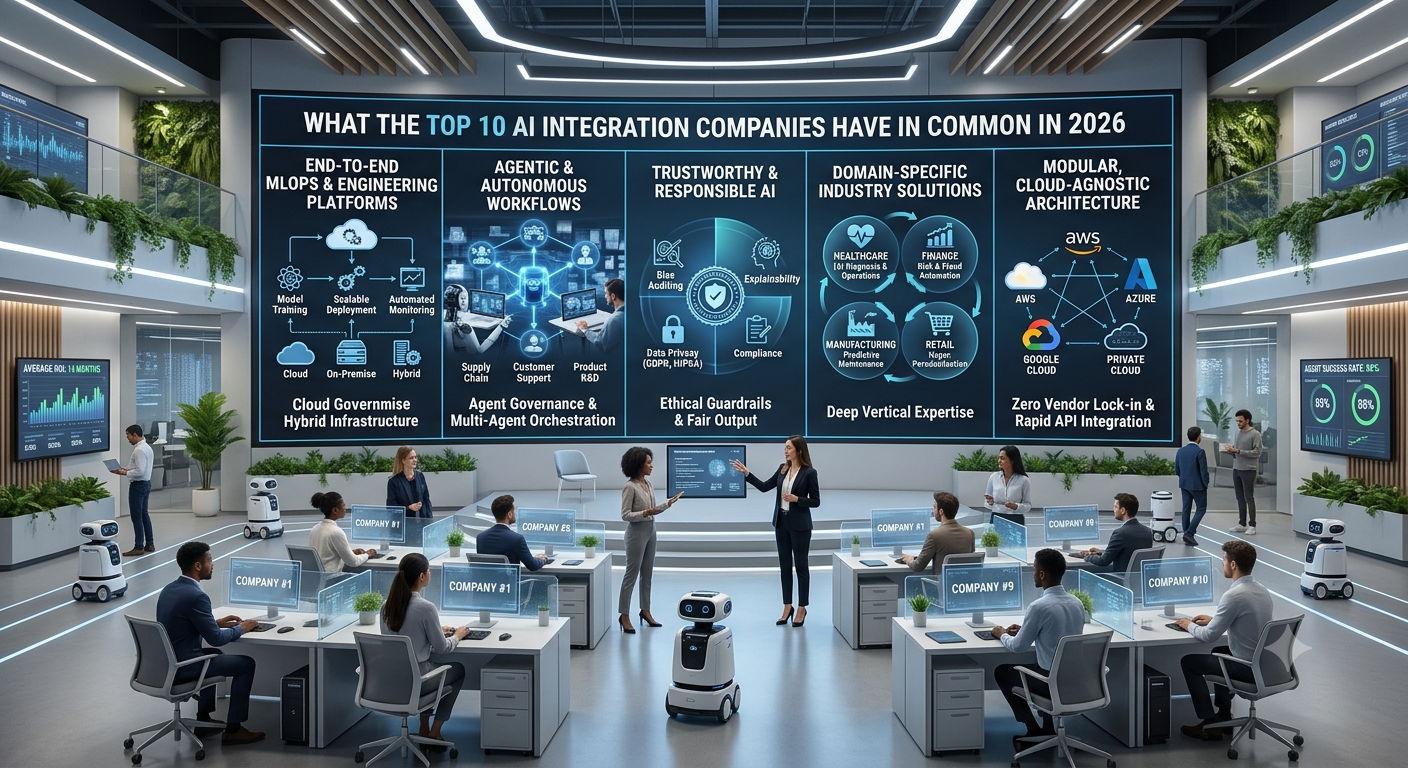
What sets the best Python development companies apart in GenAI?How the best Python development companies are different in the field of GenAI?Having the same tools doesn't make all teams equal. There are common elements to all companies in the GenAI race.
1. They create operational RAG systems which retrieve well.
The foundation of most enterprise GenAI products is retrieval-augmented generation, and it is a more complex process than it appears. The best Python companies view retrieval quality as the central engineering problem: intelligent document chunking, an appropriate embedding approach, hybrid search (semantic and keyword search), and reranking to bring the most relevant context to the forefront. Average teams add a vector search for a model and a degree of hope. Highly successful teams design retrieval with the aim of producing consistent, accurate answers.
2. They document their process as it unfolds
Prompt design is a discipline that is no longer a random, "trial and error" process. Which companies do is to include versioning of their prompts, test them systematically, and treat a change in a prompt as a code change, as a change in what it returns can move the output quality significantly. This discipline is not visible in a demo and is crucial in production.
3. They critically assess results with a degree of thoroughness.
The most difficult aspect of GenAI is that the outputs aren't just correct or incorrect — they can be better or worse on multiple fronts. Top Python teams make evaluating a part of their process, evaluating on accuracy, relevance, faithfulness to the source data, and they identify regressions early before the user does. The absence of this makes the quality of a GenAI product unstable, until customers complain. In this way, the product progresses gradually.
4. They make adjustments and adaptations when necessary
This is because sometimes prompting and retrieval is not sufficient, and the model itself must be adapted. The big players are aware of when making a model more specific to the domain is useful, versus when it's a huge luxury, and know how to do it correctly with Python if it is the right thing to do. Understanding the difference is one measure of the maturity of GenAI.
5. They control cost and latency deliberately
The benefit of GenAI features is that they're silent, meaning each model call will cost and each token will induce latency. Professional Python companies develop caching, intelligent context management, routing models, sending simple requests to cheaper models, and streaming to keep the bills and the response times controlled. This engineering discipline is what makes a GenAI product more than just a lovely pilot.
6. They are creating with an AI with agency.
Generative AI is moving beyond text generation to acting, planning, and utilizing tools, with the frontier of the technology being agents. The major Python companies are already creating these, and incorporating GenAI models into agents that are completing actual workflows. This is possible with the help of the agent frameworks being developed in Python, and the groups that understand them are creating the products that will shape the future of GenAI.
Explore the major predictions and trends driving the GenAI race in 2026.
There are some general trends that underpin the competition.
- Production using Agentic AI. Most of the action agents that take actions and fulfil workflows using Generative AI are being developed using Python. Firms that are proficient in the agent design are gaining the greatest advantage.
- Enterprises on a large scale. From experimentation to customer facing and in-house products, organizations have raised expectations about reliability, governance and data foundation based on their own data, all of which are preferable for teams with experience in Python.
- RAG and proprietary information as the differentiator. Now models are shared and have become the real GenAI advantage to a company, and the ability to connect models to the data is a clear engineering challenge for Python.
- Scrutineering of costs and ROIs. With GenAI now firmly on the budget line, the emphasis is on features that are proven to return a significant ROI, and that's where teams who care about the efficiency of their creations are going to have an advantage.
- Multimodal generation. GenAI is growing beyond text to images, sound, and image + sound—and Python has become the language where image, sound, and multimodal capabilities are being made available as products.
There are various ways to select a Python development company for GenAI projects.There are several methods to choose a Python development company for GenAI projects.
The following are practices that, once you know the landscape, can be a checklist when you're recruiting. This choice typically is based on a couple of factors:
- The track record of GenAI products. Don't simply search for AI, as more often than not, that word is only used to refer to AI built on Python.Do not just search for AI, but for shipped generative AI, RAG systems, LLM features, AI assistants, etc.
- Retrieval engineering depth. Inquire about their understanding of RAG, chunking, embeddings and reranking as the quality of the retrieval is the key to most GenAI products.
- Evaluation discipline. Reassure them that they need to measure the quality of the output systematically and not by the naked eye, maintaining the reliability of a GenAI product.
- Awareness of expenses and delays. For example, ask them how they make GenAI features go well at scale, as the undertold secret of the pilot's failure to be a product.
- Agentic capability. Hunting for experience building agents and tool using systems is where GenAI is going next.
- Engagement model fit. These are tailored to your needs depending on the extent of your requirements: a dedicated team, fixed scope or staff augmentation.
If you prefer to join a pre-compared shortlist that has already cut through the noise rather than compile your own list, our list of the top Python development companies sheds light on the leading companies on exactly these GenAI capabilities, making it a sensible next step once you've decided on what you want.
Frequently Asked Questions
What makes Python development companies the front-runners in the field of Generative AI?
As Python is the nucleus of the entire GenAI stack, python development companies are the front runners in the field of Generative AI. The major LLM vendors, orchestration systems, vector databases, and LLM evaluation platforms all support Python as their first language, so Python teams can develop, integrate, and deploy generative capabilities quickly and efficiently without designating a new language.
What are the skill sets required to develop a product using generative AI?
Creating a GenAI product is not as easy as calling a model. This includes grounding the model in your own data using retrieval (RAG), engineering and testing prompts, evaluating output quality, controlling cost and latency, wrapping it up in something useful, and so on. It's engineering issues that veteran Python groups can solve.
So, what is RAG and why is it important for GenAI?
RAG, or retrieval-augmented generation, is a generative model that builds on specific data, by first retrieving relevant context and then using that as input to the model when answering the question. It's important because it makes outputs accurate and based on a company's own information instead of generic; and well done at the end will be a key component of most enterprise GenAI products, through good chunking, embeddings, and reranking.
How to choose the right Python company for GenAI?
Seeking experience with shipped GenAI products, retrieval engineering and RAG expertise, quality control of output, understanding of cost and latency control, and experience in agentic systems. These practical skills put teams to the test for their ability to ship reliable generative products or just build a demo.
What is the cost of creating a generative AI product?
The cost will vary based on different factors such as complexity, data readiness, the need for fine tuning, and frequent use of the model, as each use of the model will incur a cost. Consider inference costs at scale, in addition to development. Consider balancing the price of a company's ability to build efficient, reliable GenAI with the lower price, because an inefficient build will cost more to operate.
What is the connection between agentic AI and generative AI for 2026?
Agentic AI goes beyond generative AI by enabling AI models to also execute actions, plan multi-step workflows, and utilize tools to finish tasks. It's the next generation of GenAI and Python's agent frameworks are the primary language for developing these systems, which is why top Python companies are putting significant efforts into agentic capability.
The bottom line
The top performers in the generative AI race are not winning due to a superior model – they all have the same one. They're winning because they've learned how to engineer the design of a product from a model: retrieval is performed correctly, prompts are treated as code, output is evaluated rigorously, cost is controlled deliberately, and agents are built for what's next? All that is accomplished in the language of python and that's why top Python Development Companies are at the forefront. With GenAI track record, retrieval depth and an evaluation discipline as your filter, the shortlist of partners worth your time is short-lived. Those teams that have actually gone to the effort of developing production-ready generative AI products, such as WebClues Infotech, are the ones left with something remarkable to showcase a year later.
\
Comments
Join the discussionNo comments yet. Be the first to comment.